Black Mountain Arborists & Ecology
Pruning Services
← Tree Work · Canopy Work
Objective-based pruning done to ANSI A300 and ISA best practices.
What it is
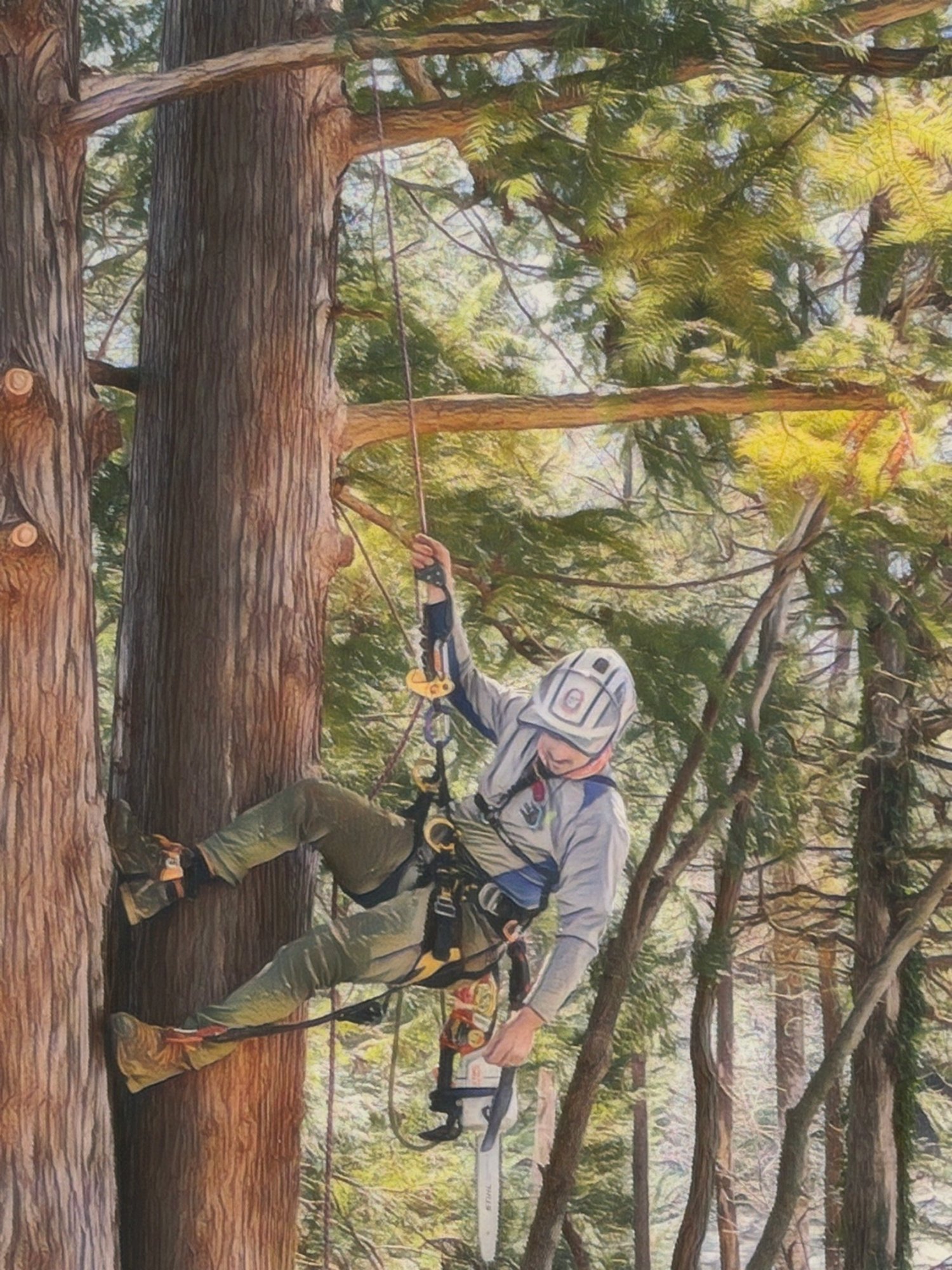
Pruning is the selective removal of branches to meet a defined goal: better structure, clearance, health, or reduced risk. The ANSI A300 pruning standard and ISA guidance describe the main types: cleaning, thinning, raising, reduction, and restoration.
When it makes sense
Young trees benefit from structural pruning. Mature trees may need clearance from roofs or lines, removal of dead wood, or reduction to lower the risk of a defective limb.
How we do it
- Set the objective first and write it down, so every cut has a reason.
- Cut at the branch collar. No flush cuts, no stubs, and no topping.
- Keep the live crown as intact as the objective allows. ISA's guidance is generally no more than 25% of the crown removed at once, and less for mature trees.
- Avoid heavy pruning of live tissue right after the spring growth flush, especially on weak trees.
Standards we follow
- ANSI A300 Pruning standard
- ISA Best Management Practices: Tree Pruning
- ANSI Z133 Safety Requirements for Arboricultural Operations
Good to know
Topping (cutting large limbs back to stubs) is not an accepted practice. ISA and the ANSI A300 standard both advise against it because it causes weak regrowth and decay.